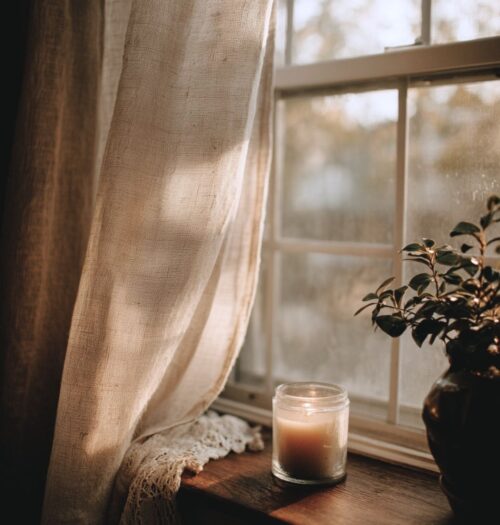
How to bring a mindfulness practice into your daily life without the pressure
There’s a memory I keep coming back to.
We were on a family holiday in Tenerife. My family headed to the hotel pool — the splashing, the laughter, the whole sunny afternoon chaos of it. And me? I just… didn’t want to be there. Not in a sad way. I simply felt pulled somewhere quieter. So I went up to the balcony, pulled a chair to face the ocean, and sat down.
That was it. No plan. No intention. I just sat.
I don’t know how long I was there. Maybe an hour. Maybe two. The waves kept coming in. Somewhere below, I could hear kids playing in the pool, a soft thread of music drifting up from somewhere. The light was doing what light does near the ocean — moving, shifting, catching on the water. And I just… watched. No thoughts I can remember. No feelings I could name. I wasn’t trying to relax or clear my head or “be present.” I was simply there. Completely, quietly there.
When I finally stood up, something had settled in me. I felt calm — not the tired kind of calm, but the full kind. Energized and still at the same time. I couldn’t explain it then. I didn’t even try.
It wasn’t until years later, when I started reading about mindfulness and going deeper into mindfulness meditation practice, that I looked back at that afternoon on the balcony and thought — oh. That was it. That was a mindfulness practice, and I had no idea.
I’m sharing that story because I think a lot of people have had moments like it. A walk where you forgot to check your phone. Cooking something slowly on a Sunday afternoon and realizing an hour had passed. Sitting with your morning coffee before the day starts, asking anything of you. Moments where you slipped, without trying, into a kind of quiet presence.
You probably didn’t call it mindfulness. You might not have called it anything.
And honestly? I think that says something beautiful. A mindfulness practice isn’t something foreign you have to learn from scratch. It’s something you’ve probably already brushed up against — in those quiet, unplanned moments where life somehow got very simple and very still, just for a little while.
That’s what this article is about.
And that’s what I want to share with you today. What mindfulness actually is — and what it isn’t, because there’s a lot of noise out there. Why it matters so much in this particular season of life. And how you can bring a real, practical mindfulness practice into your days without adding pressure to an already full plate. No rigid routines. No silence mandates. Just gentle, liveable ways to come back to yourself — again and again, as many times as it takes.
What most people get wrong about mindfulness
Here’s something I hear often — and something I believed for a long time myself.
“I tried meditation. I’m just not good at it.”
And when I ask what happened, the answer is almost always the same. My thoughts wouldn’t stop. I couldn’t clear my mind. I kept getting distracted. Which, honestly, made me smile a little the first time I understood what mindfulness meditation actually is — because that experience? Those wandering thoughts, that restless mind that won’t settle? That’s not failure. That’s the practice itself, showing up exactly as it should.
Most people come to mindfulness practice carrying a picture of what it’s supposed to look like. Serene. Silent. Effortless. Someone sitting perfectly still, thoughts dissolved, face soft with peace. And then they sit down, close their eyes, and within about forty seconds, they’re mentally writing a grocery list or replaying a conversation from three days ago. So they decide they’re doing it wrong and quietly give up.
But mindfulness practice isn’t about emptying your mind. It never was.
What it actually is — and this shifted everything for me — is the practice of noticing. Noticing when your mind has wandered. Noticing what you’re feeling without immediately reacting to it. Noticing the present moment, through your senses, without needing it to be any different than it is. The mind wanders, you notice, you come back. That’s it. That simple, slightly unglamorous loop is the practice. Every single time you catch yourself drifting and gently return — that’s a mindfulness rep. That’s you doing it right.
The other thing worth saying here is that meditation and mindfulness aren’t the same thing. Meditation is one way to practice mindfulness — a very good one, and one I love — but it’s not the whole picture. Mindfulness is a quality of attention you can bring to almost anything. Your morning coffee. A walk. Washing your face before bed. You don’t need a cushion or a timer or twenty uninterrupted minutes. You need your own awareness, and a willingness to keep returning to it.
And your nervous system? It notices. Even in small doses, that return to the present moment tells your body it’s safe to settle. Not because everything is perfect, but because right now, in this moment, you’re actually here.
Why a mindfulness practice matters in midlife
There’s something that happens in midlife that nobody really prepares you for.
It’s not the big stuff — the changes in your body, the shifting priorities, the relationships that evolve. Those are visible, talked about, and expected in some way. It’s something quieter than that. A growing sense that you’ve been running on a kind of autopilot for a very long time. Moving fast, managing everything, pushing through. And somewhere along the way, the actual texture of your days — the small moments, the sensory details, the simple pleasure of just being somewhere — started slipping past you almost unnoticed. You know, that pure attention and presence a kid experiences the world with.
I know that feeling intimately.
For years, I lived at a pace that wasn’t really mine. Always thinking ahead, always processing, always doing. My nervous system was so accustomed to that hum of high-level stress that calm actually felt unfamiliar. Almost suspicious. Like if things were quiet, I must be missing something.
And the thing is — that’s not unusual. That’s what years of pushing through, overextending, and rarely stopping to breathe actually does. It rewires your baseline. Your nervous system learns to treat busyness as normal and stillness as something to fill.
Midlife has a way of asking you to look at that honestly.
Maybe your energy is shifting, and you can’t run on the same reserves you once did. Maybe burnout has already visited once, or you can feel it quietly building. Maybe you’re just… tired of being somewhere else in your head while your actual life is happening right in front of you. That ache — that longing to actually be in your days rather than just moving through them — is not a small thing. It’s worth paying attention to.
This is exactly where a mindfulness practice becomes less of a wellness trend and more of something genuinely necessary. Not as another item on the self-care checklist, but as a real way to resource yourself. To bring your nervous system out of that chronic low hum of stress and back into the present, where your life is actually taking place.
And here’s what I find particularly beautiful about this season: you have something younger versions of yourself didn’t. Perspective. A clearer sense of what actually matters. A tiredness with pretending that busyness equals worth. Midlife, in its own quiet way, is an invitation to slow down and come home to yourself. A mindfulness practice is simply one of the most direct paths I know to do exactly that.
Everyday mindfulness — what it can actually look like
This is the part I love most, honestly.
Because when most people think about starting a mindfulness practice, they imagine they need to carve out a special block of time, find a quiet room, and sit down to formally do something. And while that kind of dedicated practice is wonderful — and yes, we’ll talk about it — it’s not where mindfulness actually lives most of the time.
It lives in your ordinary day. In the moments that are already happening.
The morning ritual
For me, it starts before anything else does.
There’s a window in my morning where the day hasn’t asked anything of me yet. I make my coffee, and I actually have it. Not while checking my phone. Not while mentally running through what needs to happen. Just the warmth of the mug, the smell, the first sip. A few minutes of simply being somewhere before the doing begins.
That’s a mindfulness practice. A small one, but a real one.
If you have a morning ritual — coffee, tea, a few quiet minutes before the house wakes up — that’s already your starting point. You don’t need to change it. You just need to actually show up for it. Full attention. Senses open. Nowhere else to be.
The kitchen as a mindfulness space
I cook because I love it. And somewhere along the way, cooking became one of my most consistent mindfulness practices — not because I planned it that way, but because cooking pulls me completely into the present.
What I love most is its visual richness. The colors of raw ingredients before anything has happened to them yet — the deep red of a pepper, the bright green of fresh herbs, the almost luminous orange of a carrot. I’m highly visual by nature, and something about seeing all of that together just… grounds me immediately.
And then the smells. Raw garlic hitting a warm pan. Spices blooming in olive oil. The way a simple combination of ingredients starts to smell like something completely new. I have a sensitive nose, and I notice all of it — the sharp ones, the sweet ones, the warm ones. By the time a meal is coming together, I’ve been present for every stage of it.
That’s not a technique. That’s just attention, given freely to something already happening.
Whatever your equivalent is — gardening, baking, arranging things, making tea slowly — notice what it feels like when you’re fully in it. That absorption, that quiet focus, that sense of time doing something strange? That’s presence. That’s you, already practicing mindfulness without calling it that.
Movement as a return to the body
Walking is probably the most underrated mindfulness practice there is.
Not power walking, not walking with a podcast filling every second. Just walking, with enough attention to actually feel it. The ground under your feet. The temperature of the air. The sounds layering around you — birds, leaves, distant traffic, your own breath.
When I walk in nature, my nervous system does something it struggles to do at a desk. It settles. Not because I’m trying to relax, but because my attention has somewhere simple and real to land: experiencing nature with all my senses and a mind switched off.
If you already walk — even just around your neighborhood, even just to clear your head — you have everything you need to practice mindfulness. You’re just being invited to put your phone in your pocket and actually notice where you are.
Presence in the in-between moments
Here’s something I’ve come to appreciate more and more: the small pauses between things.
Before you open your laptop in the morning. After you finish a task. The few seconds before you respond to a message that pulls at something in you. These tiny gaps are actually opportunities — moments where you can take one conscious breath, feel your feet on the floor, and return to yourself before moving to the next thing.
Your nervous system registers these pauses. They’re small, but they accumulate. And over time, those micro-moments of presence start to change the texture of your whole day.
You see the pattern running through all of this? Mindfulness practice isn’t something separate from your life. It’s something you bring into your life — into the cooking and the walking and the morning coffee and the quiet pause before you begin. The invitation is simply to be actually present for what’s already there.
And the more you practice that — imperfectly, inconsistently, some days better than others — the richer everything starts to feel. Not because your circumstances changed. Because you arrived.
How to practice mindfulness — three simple starting points
Let me be honest with you about something first.
When I started going deeper into mindfulness practice, I made it complicated. I read the books, I took the courses, I learned the theory. And all of that was genuinely valuable. But the most important shift happened when I stopped treating mindfulness like a subject to master and started treating it like a relationship to build. Slowly. Simply. One small moment at a time.
So if you’re new to this, or you’ve tried before and it didn’t stick, here’s what I’d suggest. Start with one of these three entry points. Just one. Give it a few days before you decide anything about it.
The three-minute breath practice
This is the simplest, most direct way I know to practice mindfulness — and it’s the one I come back to most consistently, even now.
Sit somewhere comfortable. You don’t need silence, you don’t need a special cushion. Just sit. Place one hand on your belly if that helps you feel your breath more clearly. Then breathe — inhale fully, feel your belly rise, exhale slowly, feel it fall. And for three minutes, that’s your only job. Follow your breath.
Your mind will wander. It will absolutely wander — maybe within the first twenty seconds. You’ll start thinking about something you need to do, or something someone said, or nothing in particular. And the moment you notice that? That moment of noticing is the practice working exactly as it should. You’re not failing. You’re building your mindfulness muscle. Gently, without judgment, you bring your attention back to your breath.
That’s the whole thing. Wander, notice, return. Again and again.
Three minutes. That’s all. And your nervous system will feel the difference.
The sensory check-in
This one takes about sixty seconds, and you can do it anywhere — sitting at your desk, standing in your kitchen, waiting for something.
Pause whatever you’re doing. Then slowly notice: what can you see right now, actually see, if you look? What can you hear — the obvious sounds and the quieter ones underneath? What can you feel physically — the temperature of the air, the chair beneath you, your feet on the floor? What can you smell?
That’s it. You’ve just pulled yourself out of your head and into the present moment using nothing but your own senses. It sounds almost too simple. But simple is exactly the point. Your senses are always in the present. They can’t be anywhere else. So when you tune into them, you come with them.
I use this one a lot on days when my mind is particularly busy — when thoughts are layering on top of each other, and I can feel that familiar hum of stress starting to build. It doesn’t solve anything. But it gives me a breath of the actual present moment in the middle of it all. And sometimes that’s enough to change the whole tone of the next hour.
The daily anchor ritual
This is my personal favorite for building a mindfulness practice that actually sticks — because it doesn’t require you to find extra time. It asks you to give real attention to the time you already have.
Choose one thing you do every single day. Something small and ordinary. Your morning coffee or tea. Washing your face. Stepping outside for the first time. Walking from one room to another. It doesn’t matter what it is, as long as it happens reliably.
For one week, do that one thing with your full attention. All your senses engaged. No phone, no mental to-do list running in the background. Just that moment, exactly as it is.
Feel the warmth of the mug. Notice the smell. Hear whatever sounds are around you. Be actually there for it.
What you’re doing is teaching yourself — gently, repeatedly — that presence is available at any moment. You’re not adding mindfulness to your day. You’re discovering it was already woven into your day, waiting for you to show up for it.
And here’s what tends to happen: once you start noticing the quality of attention in one small ritual, you start wanting to bring it to other moments too. It spreads naturally, organically, the way good things tend to when they actually feel good.
No pressure to get it perfect. No streak to maintain. Just one small practice, chosen by you, that fits your life as it actually is right now.
What gets in the way (and how to stop fighting it)
Let’s be real for a moment.
Because knowing about mindfulness and actually practicing it regularly are two very different things. And the gap between them isn’t usually a lack of information. It’s the very human, very understandable things that get in the way — the thoughts, the resistance, the life that keeps happening regardless of your intentions.
I’ve bumped into all of these myself. So let me share them honestly, the way I’d talk about them with a friend.
“I don’t have time.”
This is the first one that comes up, and I completely understand it. Life is full. Your days are probably already packed before they even begin. The idea of adding one more thing — even a good one — can feel genuinely impossible.
But here’s the reframe that helped me: a mindfulness practice, at its core, doesn’t ask for more time. It asks for more presence in the time that’s already there. Those three minutes with your morning coffee exist whether you’re scrolling through your phone or actually tasting your coffee. The walk you take exists whether your mind is three conversations ahead or feeling the ground under your feet.
You’re not carving out time from somewhere. You’re choosing how to inhabit the time you already have.
“I keep forgetting.”
You will forget. I still forget. Some days the morning ritual happens with full presence, and some days I’m halfway through my coffee before I realize I’ve been mentally redecorating a room or replaying yesterday’s conversation instead.
And the moment I notice that? That’s the moment I’m back. That’s actually it — that noticing is the return. You haven’t failed because you forgot. You’ve just found your way back a little later than you planned. There’s no difference in value between a mindfulness practice that started at 7 am and one that started at 7:43 am when you finally remembered.
The forgetting isn’t the problem. The belief that forgetting means you’ve failed — that’s the thing worth letting go of.
“My mind is too busy.”
I want to say something about this one quite directly, because I think it stops a lot of people before they even begin — especially those of us whose minds are naturally fast, creative, and running seventeen tabs at once.
A busy mind doesn’t need to be quieted before you can practice mindfulness. A busy mind is the perfect place to practice mindfulness. Because the practice was never about achieving silence. It was always about learning to observe the noise without being completely swept away by it.
When I sit with a busy mind — and as someone with ADHD, that’s often — I’m not trying to slow it down. I’m practicing noticing it. Watching thoughts arrive without immediately following them somewhere. Returning to my breath, or my senses, or whatever anchor I’ve chosen. Not once, but maybe forty times in three minutes. And that’s fine. Each return is the practice doing exactly what it’s meant to do.
Your busy mind isn’t a barrier to mindfulness. It’s actually one of the best teachers you have.
“I don’t feel calm afterward.”
Sometimes you will. Sometimes you’ll finish three minutes of breath awareness and feel genuinely quieter, softer, more settled. That’s real, and it’s lovely.
And sometimes you won’t. Sometimes you’ll sit, and observe, and return to your breath a dozen times, and stand up feeling pretty much the same as when you started. Maybe even a little more aware of how much is buzzing around in your head.
That’s not a sign the practice isn’t working. That’s just an honest day of practice.
The goal was never a particular feeling. It was presence — showing up for your own experience, whatever that experience happens to be right now. Some days that experience is peaceful. Some days it’s restless and full of static. Mindfulness isn’t asking you to change what’s there. It’s asking you to be honest about it, and to meet it without judgment.
That, I think, is one of the most quietly radical things a mindfulness practice teaches you over time. Not to feel a certain way. But to stop fighting the way you actually feel.
And from that place — from that small act of honest, non-judgmental presence — something does tend to shift. Not always dramatically. But gradually, gently, in the way that real things change.
Mindfulness practice and your emotional wellbeing — what changes over time
I want to share something personal here.
Two years ago, my inner landscape looked quite different from what it does now. I was living more in my head than in my life. Thinking ahead, planning, worrying about things that hadn’t happened yet — running mental simulations of future scenarios while my actual present moment waited patiently for me to show up. My nervous system was doing what nervous systems do when they’ve been in that pattern for a long time. It was tired. And underneath the tiredness, there was a kind of low hum of resistance — to what was, to how things felt, to the gap between where I was and where I thought I should be.
Mindfulness didn’t fix that overnight. But it started something.
The first shift was small and almost embarrassingly simple. I started noticing when I was fighting. Fighting how I felt. Fighting what was happening. Fighting the present moment because it wasn’t the one I’d planned for or hoped for. Just… noticing it. Not changing it yet. Just seeing it clearly.
And that noticing — that honest, non-judgmental observation — created something I hadn’t expected.
A pause.
A tiny gap between what was happening and my reaction to it. And in that gap, for the first time, I had a choice. Not always a dramatic one. Sometimes, just the choice to take a breath instead of spiraling. To stay with what was actually there instead of leaping forward into anxiety about what might come next.
That is what a consistent mindfulness practice does to your emotional wellbeing over time. Not the dramatic transformation. The quiet, accumulating shift of that pause getting a little wider. A little more available. A little more yours.
What changed for me — and what I see changing for others who commit to this — isn’t that difficult emotions stop arriving. They don’t. Life keeps bringing everything it brings. The challenges, the uncertainty, the moments that ask a lot of you. But your relationship to those moments starts to change. You stop meeting them with such resistance. You start meeting them, instead, with something closer to — I don’t want to say acceptance, because that word can sound passive — more like openness. A willingness to be with what is, rather than immediately trying to push it into something else.
And from that place, something unexpected happened for me. I became more creative. Not just in the creative work I do — though that opened up too — but in how I meet life itself. Taking things as they come. Finding possibility in the unexpected. Responding instead of reacting. Life started feeling less like something happening to me and more like something I was genuinely participating in.
That’s what I mean when I say mindfulness practice changed my life. Not that everything became easy, peaceful, or perfectly hygge. But that I started choosing more. Choosing presence over worry. Choosing joy over busyness for its own sake. Choosing to meet myself where I actually am, right now, instead of where I think I should be.
Not every moment. Not perfectly. There are still days when I’m halfway through a spiral before I remember to breathe. But I remember now. And when I do — I choose again.
That choice is what a mindfulness practice quietly gives you over time. Not a permanent state of calm. Something more honest and more useful than that. The ability to come back. Again and again. To this moment, to yourself, to the life that’s actually happening right in front of you.
And the more you practice that return, the richer everything starts to feel. Not because your circumstances changed. Because you arrived.
A word about consistency — without the pressure
There’s a phrase I heard from a coach years ago that has stayed with me ever since.
We are human beings, not human doings.
It sounds simple. Almost too simple. But sit with it for a moment and notice what it stirs. Because most of us — especially those of us who are driven, creative, passionate about what we do — have spent a significant portion of our lives with the emphasis firmly on the doing. Moving, achieving, producing, planning, fixing. Measuring our days by what got done rather than how fully we actually lived them.
And then mindfulness comes along and quietly suggests something almost revolutionary: that being isn’t the reward you get after all the doing is finished. It’s the foundation everything else grows from.
So when I talk about consistency in a mindfulness practice, I want to separate it completely from the kind of consistency that feels like pressure. The streak you have to maintain. The habit you failed at because you missed three days. The guilt of knowing you should be meditating and not doing it.
That kind of consistency creates exactly the opposite of what mindfulness is trying to give you.
Here’s how I actually think about it.
Life goes on. That’s the only consistency that’s guaranteed. Your life keeps going — moment after moment after moment, whether you’re present for it or not. You can’t pause it. You can’t skip the difficult parts or fast-forward to the good ones. It’s happening right now, as you read this. And it will keep happening.
The question isn’t whether you’ll be consistent in your mindfulness practice. The question is whether you’ll choose, today, to move through your life with your eyes open. With your senses awake. With enough presence to actually feel what’s here rather than sleepwalking through it toward some future moment that will, when it arrives, also require your presence.
That’s it. That’s the whole consistency ask.
Not a perfect daily practice. Not a specific number of minutes. Just the choice, made again and again — sometimes first thing in the morning, sometimes at 3 pm when you suddenly remember, sometimes only in the last quiet moment before sleep — to be here. In this moment. The only one that’s actually available to you.
You will forget. You will have days when presence feels genuinely out of reach, when your mind is loud, life is demanding, and practicing mindfulness feels like something that belongs to a calmer version of yourself in a calmer version of your life. Those days are part of the practice too. Not exceptions to it.
And on those days, the most mindful thing you can do is meet yourself exactly where you are. Not where you think you should be. Not where you were last Tuesday when the practice felt easier. Right here, in this slightly chaotic, imperfect, real moment.
Because the goal is never perfection. It is presence.
And presence — real, honest, sensory, alive presence — is always, always available. Even now. Even here. Even in the middle of everything.
You just have to choose it.
An invitation, not a to-do
Do you remember where I started?
A balcony in Tenerife. The sound of waves. Kids laughing somewhere below. Soft music drifting up from nowhere in particular. And me, sitting there with no plan, no intention, no idea that what I was doing had a name or a practice or a whole body of wisdom behind it.
I was just there. Fully, quietly there.
And when I stood up — however long later that was — something had settled in me that I hadn’t even known was unsettled. I felt full. Calm in the way that actually means something. Present in my own life in a way I hadn’t been in a long time.
That was my first real taste of what a mindfulness practice can give you. And I didn’t even know I was asking for it.
I think about that often now. How presence is always available. How it doesn’t require anything special from me — no technique, no training, no particular circumstances. Just a willingness to stop, to stay, to let what is here actually reach me.
You don’t need to become someone different, more disciplined, or more spiritually advanced to practice mindfulness. You don’t need a perfect morning routine or a dedicated meditation space or thirty uninterrupted minutes. You need your own senses, your own breath, and the willingness to show up for the moment you’re actually in.
Start with one thing. The morning coffee you’re going to make anyway. The walk you’re already planning. Three minutes with your hand on your belly and your attention on your breath. One ordinary moment, chosen consciously, given your full presence.
See how it feels.
Not as a test. Not as the beginning of a streak you have to maintain. Just as a small, honest experiment in what it’s like to actually be here — in your life, in your body, in this particular moment that will never come again.
Because here’s what I’ve learned, living this and practicing this and coming back to it again and again after losing it: life doesn’t get less full. The days don’t slow down on their own. The to-do lists don’t shrink. But when you practice being present — really present, with your senses open and your attention here — something shifts in how all of that feels. Less like a current pulling you under. More like something you’re moving through with your eyes open.
More like a life you’re actually living.
And that change of perspective, to me, is what all of this is really about. Not mindfulness as a wellness practice you add to your routine. Mindfulness as the quiet, radical choice to experience your life fully. With all its richness, all its imperfection, all its ordinary extraordinary moments.
The waves are still there. The coffee is still warm. The present moment is still waiting.
You can choose it any time.
If you’d like a gentle starting place, join me for 7 days of gentle practices delivered straight to your inbox. Each day brings a simple invitation to experience more presence, nourishment, and comfort in your daily life. No pressure. No perfection. Just simple moments that create real shifts — all in just a few minutes a day.
And if something in this post stirred something in you — a memory, a reflection, a moment of recognition — I’d love to hear it. Share it in the comments below. Sometimes the most meaningful thing we can do is simply say: yes, I felt that too.
You May Also Like