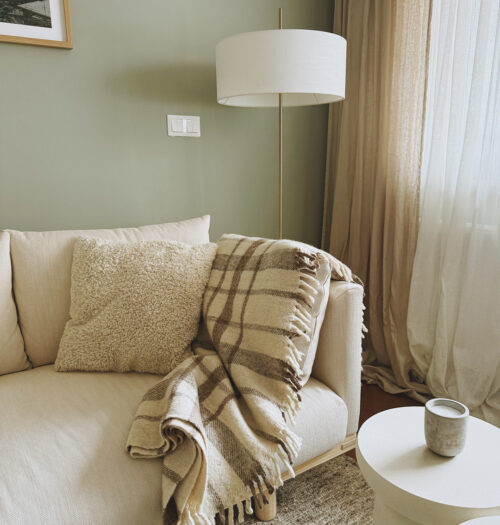
How gentle spaces support calm, comfort, and emotional wellbeing
There are days when everything feels a little too loud.
The world moves fast, expectations pile up, and even home—the place meant to offer rest—can start to feel heavy or draining.
I know this feeling well.
For a long time, I believed that calm would arrive once things were done—once the house was more organized, more beautiful, more “together.” But what I’ve learned, slowly and gently, is that a healing home isn’t something you achieve. It’s something you listen to.
And our homes? They’re always speaking.
They quietly shape how we feel each day—influencing our nervous system, our mood, our ability to rest and regulate emotions, often without us even noticing. A space that feels cluttered, rushed, or uncomfortable can keep us slightly on edge. A space that feels supportive allows us to soften, breathe, and settle more easily.
This isn’t about creating a perfect home.
It’s not about following trends or having everything in its place. And it’s certainly not about doing more.
A hygge and healing home begins with awareness—with noticing how your space meets you where you are. With understanding that your environment can either ask more of you… or gently hold you.
In this first part of the series, I want to explore how your home affects your emotional wellbeing in quiet, everyday ways. Not to overwhelm you, but to offer understanding. Because when you see your space with kinder eyes, small shifts become possible—and caring for your home becomes an extension of caring for yourself.
Let’s begin there.
How your home quietly shapes your emotional wellbeing
Your surroundings influence you in ways that often go unnoticed.
The colors you see when you wake up. The texture of the blanket you reach for. The sound of traffic filtering through a window or the silence of a room at dusk. These details accumulate throughout the day, affecting your stress levels, your mood, and how easily you can settle.
Your nervous system—think of it as your body’s built-in safety monitor—constantly scans your environment. It’s the part of you that decides, often without you consciously realizing it, whether you’re safe to relax or whether you need to stay alert. When your space feels chaotic, your body picks up on that and stays a little tense, a little watchful. When it feels calm, your system receives permission to let go and soften.
This isn’t about blame.
You’re not doing anything wrong if your home feels overwhelming right now. Life gets busy. Energy ebbs and flows. Sometimes we inherit spaces that don’t quite fit us yet, or we’re navigating transitions that leave little room for tending to our surroundings.
But understanding this connection—between space and nervous system, between home and heart—opens a door. It helps you see that the tension you feel isn’t all internal. Sometimes it’s your environment quietly asking for attention.
When you begin to notice how your home affects you, you gain the ability to respond with kindness rather than frustration.
When a home feels restorative vs. when it feels draining
Not all spaces affect us the same way.
Sometimes you can’t quite name why a room feels difficult. You walk in and immediately want to leave, or you feel restless without understanding where it’s coming from. Other times, you sink into a space, and your whole body exhales.
The difference isn’t always obvious because we’ve learned to adapt. We get used to squeezing past furniture, to visual chaos, to lighting that never feels quite right.
We stop noticing because noticing every discomfort would be exhausting.
But your body still registers it all.
That fidgety feeling when you can’t settle on the couch. The way you avoid certain rooms without thinking about why. The sudden urge to do something—anything—because sitting still in that space feels impossible. These aren’t random. They’re responses to an environment that’s subtly asking more of you than you realize.
Here’s what a draining home might feel like in your actual, daily experience:
- Your eyes never have a place to rest—every surface holds something waiting to be dealt with
- Moving from room to room requires squeezing past furniture or stepping over piles
- The lighting feels harsh in the morning or too dim in the evening
- You can’t find what you need without searching, which adds small frustrations throughout the day
- Unfinished projects sit visible, whispering reminders of things undone
- The temperature never feels quite right, leaving you either too cold or uncomfortably warm
Now, contrast that with spaces where you naturally linger. Where time slows down just a little. Where your shoulders drop without you telling them to.
A restorative home often shows up in these quiet ways:
- Your body can move freely without obstruction
- Your eyes find moments of visual quiet—places that don’t demand attention
- You have spots that invite you to sit and simply be
- Familiar items surround you, offering gentle recognition
- The lighting shifts naturally with the rhythms of the day
- Small comforts are easy to access—a soft throw, a favorite cup, a candle you love
These aren’t rules. They’re invitations to notice.
What matters is your experience. How does your body feel when you walk through your front door? Does your chest expand or tighten? Do your shoulders drop or rise?
Your home might support you beautifully in some areas while feeling difficult in others. That’s normal. Awareness simply helps you see where ease lives and where friction builds.
Visual calm: the quiet power of what you see
What you see affects how you feel more than you might realize.
More often than not, people don’t even consciously connect what they’re looking at with how they’re feeling. A friend shared this with me over tea one afternoon. She kept describing feeling “buzzy” and scattered at home, unable to sit still, her mind racing with things she suddenly felt she had to do. She thought maybe she was drinking too much coffee or not sleeping well.
Then she mentioned, almost as an aside, that her dining table had become a catch-all—mail, her daughter’s art supplies, work documents, things waiting to be put away. Her kitchen counter held three different half-started projects. The coffee table was buried under books, remotes, and magazines.
“But that’s just a normal mess,” she said. “Everyone has that.”
Maybe. But here’s what happened when she cleared just the dining table one Saturday morning: she sat down with her tea and actually stayed there. For twenty minutes. Without jumping up to do something. Without that fidgety, on-edge feeling.
Her environment had been quietly shouting at her, and she’d stopped hearing it because the noise had become constant.
Visual clutter isn’t just about mess. It’s about sensory overload—your eyes constantly processing information, your brain categorizing and sorting even when you’re not consciously paying attention.
Crowded surfaces create mental noise. A table covered with mail, dishes, remote controls, and unopened packages asks your mind to track each item. Unfinished projects stacked in corners whisper about obligations. Even items you love, when grouped too densely, can contribute to overwhelm rather than comfort.
This doesn’t mean you need to clear everything away or live in stark minimalism.
It means choosing what stays visible with intention.
Some items deserve prominence because they bring genuine comfort or beauty. A photograph that makes you smile. A plant you tend with care. A candle that fills the room with warmth when lit. These things nourish rather than deplete.
Other items—the ones that carry emotional weight, remind you of tasks, or simply exist out of habit—might serve you better stored away or released entirely.
Visual calm comes from giving your eyes permission to rest.
When you look around a room, what draws your attention? Does it feel like an invitation or a demand?
You don’t need to answer these questions with immediate action. Simply noticing creates space for gentle shifts over time.
Flow and ease: how movement through your home shapes stress
Your body remembers every time it has to squeeze past furniture, reach awkwardly for something, or step carefully to avoid tripping.
These small physical negotiations accumulate throughout the day, creating subtle tension that settles into your muscles and nervous system. When movement through your home requires constant vigilance, your body never fully relaxes.
Blocked paths mean your body stays slightly alert. Awkward layouts create friction between intention and action. When you need to think about how to move through your own space, energy drains unnecessarily.
Ease in movement creates ease in emotion.
This isn’t about redesigning your home or buying new furniture. It’s about noticing where you hesitate, where you squeeze, where you work around obstacles you’ve stopped questioning.
Where does your body tense as you move through your day?
Maybe it’s the corner you always bump your hip against. The drawer that requires yanking. The light switch you have to reach behind furniture to access. The doorway narrowed by items that have lived there so long you no longer see them.
These moments matter.
When you remove friction—when you can move through your home with your body relaxed rather than braced—your nervous system receives the message: you’re safe here. You belong here. This space supports you.
Sometimes the kindest thing you can do for yourself is clear a path.
Familiarity, belonging, and feeling at home
There’s a reason certain spaces feel immediately welcoming while others, no matter how beautiful, leave you feeling like a guest.
Familiarity soothes.
When your home reflects your preferences, your memories, your particular way of being, it becomes a place where you can exhale. You don’t need to perform or adjust. You can simply exist.
This has nothing to do with how your home might photograph or what someone else would think walking through your door. It’s about recognition—the feeling that this space knows you.
Maybe it’s the mug you always reach for in the morning. The spot on the couch that’s unmistakably yours. The way light falls through a particular window at a particular time of day. The books stacked beside your bed, each one waiting for the right mood to return to it.
These small, personal details create belonging.
Your home doesn’t need to impress anyone. It needs to recognize you—to hold the evidence of your living, your preferences, your comfort. When it does, emotional grounding comes more easily.
During stressful periods, familiarity becomes even more important. When the world feels uncertain, coming home to something known and constant offers relief. Your nervous system softens because it recognizes safety in the ordinary.
You’re allowed to keep things simply because they feel like home to you.
Environmental triggers you may overlook
Some elements of your environment create ongoing stress so subtle you’ve stopped noticing.
Harsh lighting that never quite feels right. Constant background noise—traffic, appliances humming, neighbors through thin walls. Uncomfortable seating that leaves you shifting position repeatedly. Temperatures that swing between too warm and too cold.
These aren’t dramatic problems. They’re quiet, persistent irritations that accumulate throughout the day.
Your body responds to all of it.
When discomfort becomes constant, emotional regulation becomes harder. You might feel inexplicably tense without understanding why. Small frustrations feel larger. Patience wears thin more quickly.
Identifying these triggers helps you understand why certain spaces feel draining.
You don’t need to fix everything at once. Sometimes awareness alone creates relief—knowing why you feel tense in a particular room removes the mystery. You’re not imagining it. Something real is affecting you.
From there, small adjustments become possible.
A lamp that offers softer light. Curtains that muffle street noise. A cushion that makes your favorite chair actually comfortable. Adjusting the thermostat half a degree in a direction that feels better.
These changes might seem too small to matter, but your nervous system notices.
When your environment stops working against you, the relief is real.
A quiet invitation
You don’t need to change everything about your home right now.
You don’t need a renovation, a complete reorganization, or a single “perfect” solution.
What helps is simply beginning to notice.
Tonight, or tomorrow morning, or whenever feels right—choose one room. Stand in the doorway for a moment.
Breathe.
Notice how your body feels in that space.
Does your chest expand or tighten?
Do your eyes find somewhere peaceful to land?
Can you move freely, or does something ask you to navigate around it?
You’re not looking for problems to solve. You’re listening to what your home is already telling you.
Because a healing home begins with awareness—with seeing your space through kinder eyes and recognizing that your environment shapes how you feel each day.
When you understand this connection, small shifts become possible. Caring for your home becomes an extension of caring for yourself.
And that care doesn’t require perfection.
It only asks for gentleness, intention, and the willingness to listen.
In the next part of this series, we’ll explore what comfort truly means—how to define it for yourself rather than following someone else’s version. Because once you understand how your home affects you, the next step is learning what genuinely supports your wellbeing.
Until then, may your home meet you gently.
You May Also Like